Choosing the Best Family Compounds in Guanacaste

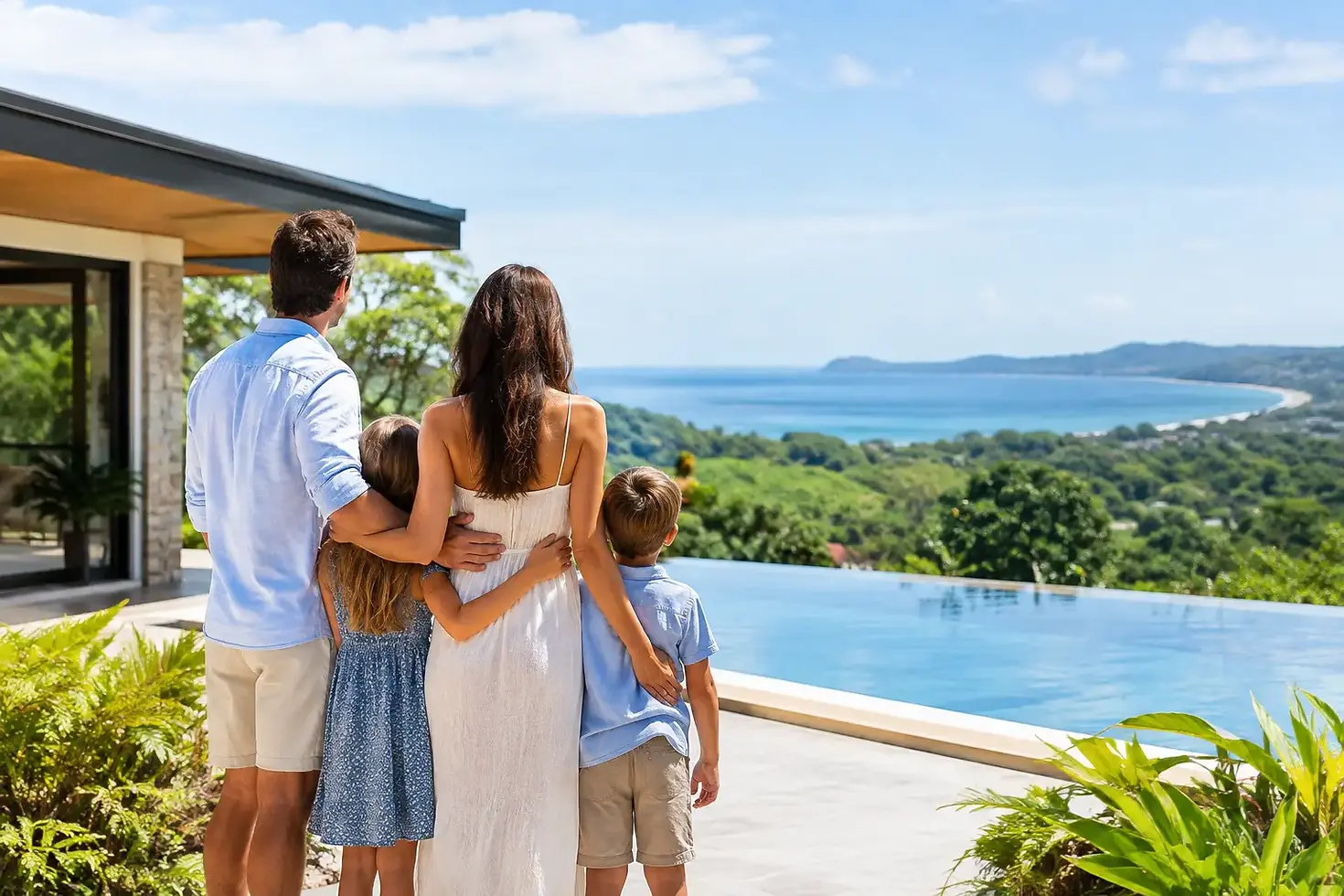
A true family compound is not simply a large home near the beach. It is a private setting designed to let several generations gather with ease, retreat in comfort, and return year after year. For buyers considering the best family compounds Guanacaste offers, the distinction matters. The right property becomes the setting for unhurried Christmas mornings, milestone birthdays, surf lessons with grandchildren, and a more intentional way of being together.
Guanacaste is particularly suited to this kind of ownership. Its dry tropical climate, international accessibility, polished hospitality infrastructure, and extraordinary coastline make it one of the rare places where a residence can feel both profoundly removed and effortlessly usable. Yet the most compelling family estates are not defined by acreage or bedroom count alone. They are shaped by privacy, circulation, service, and a location that will continue to feel relevant to every member of the family.
What Defines the Best Family Compounds in Guanacaste
The finest compounds create a graceful balance between togetherness and independence. A main residence may host the family’s shared rhythm - long breakfasts, formal dinners, movie nights, and poolside afternoons - while detached guest casitas allow adult children, grandparents, and close friends to settle in without sacrificing personal space. This arrangement turns a holiday home into a place people genuinely want to revisit, rather than a house that feels crowded at capacity.
Thoughtful separation also supports the practical reality of multigenerational travel. A well-positioned guest pavilion can provide quiet for early sleepers, a more private refuge for couples, or an easy space for a visiting caregiver or household manager. The most successful estates make these distinctions feel natural rather than overly programmed.
Architecture is equally consequential. Open-air living is central to Guanacaste, but true comfort depends on how a home handles the region’s sun, wind, rain, and changing seasons. Deep overhangs, shaded terraces, covered walkways, cross-ventilation, and carefully positioned pools all influence whether the estate is inviting at two in the afternoon as well as at sunset. Generous indoor-outdoor rooms should feel elegant without leaving the household exposed to heat or weather.
For a family legacy property, the strongest design choices are often the least theatrical: enduring materials, landscape that matures beautifully, bedrooms with comparable privacy, and living spaces that can absorb a full house without losing their composure.
Location Sets the Rhythm of Ownership
Guanacaste offers several distinct settings for compound ownership, each with its own character. The Papagayo Peninsula appeals to families who value an elevated resort environment, refined service, private clubs, and close proximity to Liberia’s international airport. Its terrain can offer dramatic ocean views and a powerful sense of arrival, though hillside living may require more deliberate consideration of walkability and intergenerational mobility.
Beachfront and near-beach communities around Hacienda Pinilla offer a different rhythm, with space, recreational amenities, and access to surf, golf, and horseback riding. Here, a compound can feel especially relaxed and active, with days organized around the outdoors rather than a formal resort calendar.
Las Catalinas provides a walkable, design-forward village environment where a family can step out for dining, recreation, and community without relying on a vehicle for every movement. For some buyers, that social ease is a considerable advantage. Others will prefer the deeper privacy, larger landholdings, and more individualized arrival experience found in a standalone estate.
Playa Grande, Tamarindo’s surrounding enclaves, and select coastal areas farther south can also offer compelling opportunities, particularly for buyers who want an established beach culture and a residence with a more independent spirit. The trade-off is that services, roads, and travel times can vary substantially from one micro-market to the next.
The question is not simply which location is most prestigious. It is how your family will use the property. A family with young children may prize a swimmable beach and short airport transfer. A family of avid golfers, boaters, or surfers may place recreation at the center of the decision. Those who expect frequent entertaining may favor a setting with nearby dining and hospitality, while others will regard privacy as the ultimate luxury.
Design for a Full House, Not a Photo Shoot
A compound should remain elegant when every bedroom is occupied. That requires a more discerning evaluation than a typical second-home purchase.
Begin with the social center of the residence. The kitchen should support both family breakfast and catered celebrations, with ample refrigeration, sensible back-of-house access, and room for people to gather without interrupting the work. The dining area should accommodate the group you expect to host, not merely the group that photographs well. A covered outdoor lounge, particularly one with a proper bar, dining zone, and nearby powder room, often becomes the estate’s most-used space.
Bedrooms deserve equal attention. Families tend to return to homes where each guest feels considered. A compound does not need identical suites, but it should avoid an obvious hierarchy in which one wing feels exceptional and another feels like an afterthought. Ground-level guest rooms, accessible pathways, and a bedroom close to the primary gathering spaces may become more valuable as the family evolves.
Children’s needs are also worth considering beyond the usual bunk room. Secure pool design, shaded lawn areas, a media room that contains the noise of rainy afternoons, and easy access to beach equipment can transform the everyday experience. If the estate includes a fitness pavilion, sport court, or game room, it should enhance the property’s rhythm rather than compete with its tranquility.
Privacy, Security, and Service Are Part of the Asset
At this level, privacy is not an amenity. It is part of the property’s enduring value. Gated access, thoughtful setbacks, discreet landscaping, and a site plan that limits sightlines from neighboring residences all contribute to a genuine sense of retreat. Ocean-view homes are especially compelling, but buyers should assess whether the view comes with exposure to roads, resort activity, or future development.
Security should be professionally considered without making the home feel fortified. Reliable entry systems, exterior lighting, perimeter planning, secure storage, and dependable local response protocols are more meaningful than visible hardware. A well-run estate also needs operating systems that work when the owners are away, from water and power management to storm preparation and routine maintenance.
Service capacity is another quiet marker of quality. In Guanacaste, a compound may require a property manager, housekeeper, gardener, pool technician, chef, driver, and security support depending on its scale and use. The best homes accommodate this reality with discreet staff circulation, storage, service areas, and maintenance access. A beautiful residence that is difficult to operate can become a burden. A well-conceived estate preserves its ease, whether the family arrives for a long weekend or an entire season.
Look Beyond the Public Market
Many of Guanacaste’s most exceptional legacy properties are privately held and not broadly advertised. Owners of distinctive estates often prefer discreet introductions, particularly when a property has been maintained as a family retreat for years. This is where disciplined market access matters as much as public inventory.
A thoughtful search begins by defining the family’s non-negotiables: the preferred coastline, airport tolerance, number of independent sleeping quarters, walkability, beach access, service expectations, and privacy threshold. From there, buyers can evaluate both available residences and select off-market opportunities with more clarity.
Due diligence should be equally exacting. Title review, boundary confirmation, access rights, water availability, construction history, permitting, condominium or community rules, and operating costs all deserve careful attention. Coastal and hillside properties can be extraordinary, but they may carry unique considerations related to terrain, drainage, roads, and maintenance. Trusted local legal, tax, engineering, and property-management counsel should be assembled early, not after a preferred estate has already captured the family’s imagination.
A Legacy Worth Returning To
The ideal Guanacaste compound does more than provide a spectacular address. It creates continuity: a place where the family’s stories begin to accumulate, where a familiar terrace becomes the setting for annual traditions, and where each generation finds its own reason to return. Choose the property that makes that future feel not only beautiful, but effortless to live.

Comments